Over Here International Perspectives on Art and Culture New Museum
New: Open up images from the Smithsonian National Museum of African American History and Culture
Open Artstor: Smithsonian National Museum of African American History & Culture is now bachelor on both the Artstor and JSTOR platforms, featuring a selection of approximately 2,500 images under Creative Commons licenses. This is part of an initiative to aggregate open museum, library, and annal collections across disciplines on both resource. We are proud to present this content, along with the freshly published Open Artstor: Schomburg Center for Enquiry in Blackness Culture (New York Public Library) collection as part of an ongoing initiative to bring more African American resources to Artstor and JSTOR.
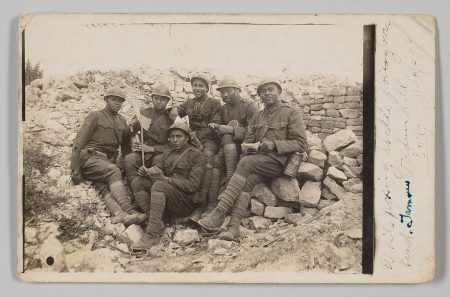
Photographic postcard of soldiers in Earth War One at Verdun. July 1918. Epitome and information from the Smithsonian National Museum of African American History and Civilisation. Creative Commons: Gratis Reuse (CC0).
Established by an act of congress in 2003 and opened in 2016, the National Museum of African American History and Civilization (NMAAHC) is devoted exclusively to the documentation of African American life. The electric current selection of images in Artstor represents a broadly based interpretation of the civilisation, with diverse narrative histories including enslavement and emancipation, protest and civil rights movements, and the lives of celebrated citizens and everyday people. It provides almost of the museum'south online offerings including photography, fine art, artifacts, fashion, musical instruments, letters and cartes de visite, books, broadsheets, political buttons, and all types of ephemera, collectively portraying the lives of African Americans from around 1700 to the 2010s. The eclectic and dynamic perspective provided past this varied collection is summed upward by the museum'due south incoming Manager, Kevin Immature. In a contempo interview the poet, author, essayist and editor characterized the museum's mission:
We're in history now, and that history is a living thing…Think almost the art people are making, the conversations people are having. That's where we tin collect and connect and aid people come across the bigger moving-picture show… We're thinking about what that history means, merely also the power of joy and pleasure." 1


Photography is the central witness to history in the museum's holdings. A varied admitting small sampling reveals the reach of the collection: soldiers pose with slap-up composure on the rubble at Verdun, 1918 (an inscription states "while passing shells going over head") — members of the African American 372nd Infantry Regiment that fought with the French and were awarded the Croix de Guerre; the solemn eyebrow of Booker T. Washington, founder of the Tuskegee Establish, captured in a portrait past the African American photographer Cornelius M. Battey, 1 of the get-go Blackness portraitists to gain recognition; a vision of c. 1940, jazz legend Billie Holiday luminous, on the cusp of superstardom, in a shot by society lensman Robin Carson.
Fashion — wearable culture and history — also fills an of import part at the museum. The core of the collection comes from the Black Way Museum established by Lois K. Alexander Lane in Harlem in 1979, the bequest of her daughter Joyce Bailey, consisting of archives and around 2,000 garments.


The couture creations of Ann Lowe of Harlem are highlights, exemplified here by a blackness cocktail apparel, c. 1960, a silk, chiffon, and taffeta confection with an applique neckline of paw sewn roses and leaves. In contrast, a bold reddish velour and gold braid mini-dress is unmistakable as the uniform of Star Trek'southward Lt. Uhura played by Nichelle Nichols in a footing-breaking boob tube role for an African American adult female. Fashion shifts from the decorative to the declarative with the T-shirt that proclaims "This Own't Yo Mama'southward Civil Rights Movement." Activist Rahiel Tesfamariam donated the shirt that she wore to a protest in Ferguson on the first anniversary of the shooting of Michael Brown. The shirt was made by Easily Up United, and the slogan paraphrases the words of rapper Tef Poe, co-founder of the motility.
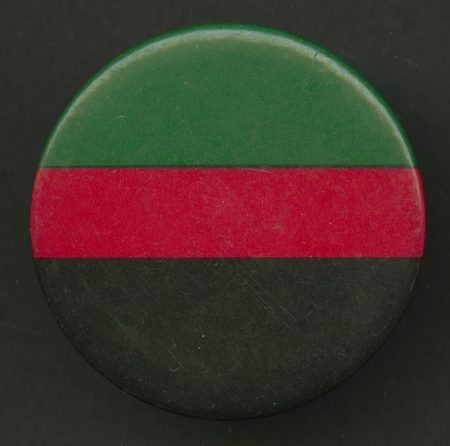
Pinback button of the Pan-African flag. Mid-20th century. Image and information from the Smithsonian National Museum of African American History and Civilization. Creative Eatables: Free Reuse (CC0).
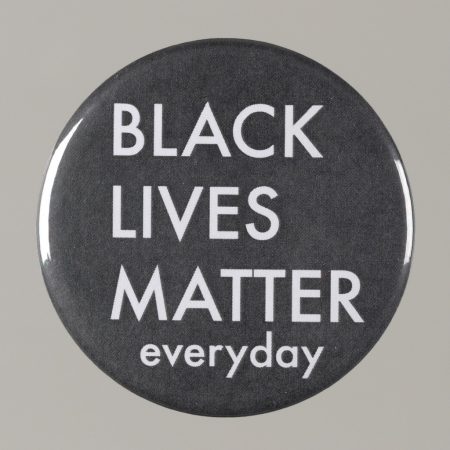
Pinback button stating "Black Lives Matter Everyday." 2015. Image and data from the Smithsonian National Museum of African American History and Culture. Creative Commons: Free Reuse (CC0).
Pinback buttons form another subcollection at the museum with hundreds of examples. Originally developed every bit messengers of political propaganda in the tardily 1900s, they have been adapted as tiny nevertheless powerful platforms for proclamation and reform. The colors of the Pan-African flag shine like a buoy in a pin dating to the mid 20th century, while the "BLACK LIVES MATTER everyday" button, fabricated in 2015 for the 20th anniversary of the Million Man March, repeats the call that has spread effectually the globe since it first arose in 2013 over the injustice of the amortization of Trayvon Martin'south killer.
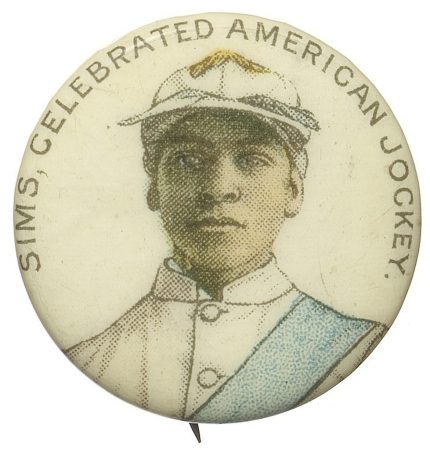
Whitehead and Hoag Company. Pinback button featuring Willie Simms. c. 1895. Image and data from the Smithsonian National Museum of African American History and Civilization. Artistic Commons: Gratis Reuse (CC0).
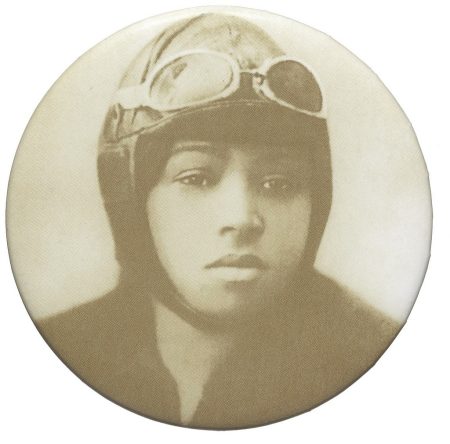
Pinback button featuring … Bessie Coleman. Mid to tardily 20th century. Paradigm and data from the Smithsonian National Museum of African American History and Culture. Artistic Commons: Costless Reuse (CC0).
The buttons in the collection are too memorabilia that celebrate and preserve the personae of exceptional individuals from the African American customs, exemplified hither by Willie Simms and Bessie Coleman. Simms was a leading American jockey of the late nineteenth century, at a time when African Americans dominated the sport and were amidst the highest paid athletes — earlier they were largely shut out by the 1920s. "Brave Bessie" became a sensation as a female aerobatic pilot, overcoming obstacles to aeronautical training for African Americans and women domestically by pursuing her training in France.
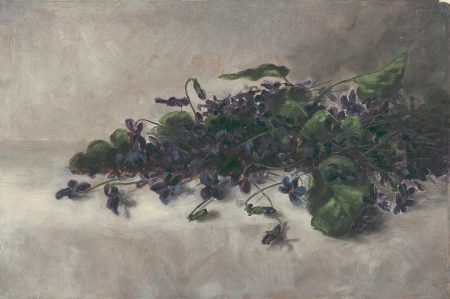
Pauline Powell Burns. Violets. c. 1890. Image and data from the Smithsonian National Museum of African American History and Culture. Creative Commons: Free Reuse (CC0).
Our introduction to the drove concludes with an intimate, delicate still life painting of violets by Pauline Powell Burns, c. 1890. Cocky-taught, Burns was highly regarded in her day and she was one of the kickoff African American artists to exhibit publicly in California. This painting is among a handful of her traceable works and it is an outstanding display of her skill.
— Nancy Minty, collections editor
1 Peggy McGlone, African American Museum director Kevin Immature focuses on culture and connections – The Washington Post , May xx/21.
Source: https://www.artstor.org/2022/01/14/new-nearly-2500-open-images-from-the-smithsonian-national-museum-of-african-american-history-and-culture/
0 Response to "Over Here International Perspectives on Art and Culture New Museum"
Post a Comment